Is Poor Roof Ventilation Shortening the Life of Your Roof?
What Roof Ventilation Actually Does
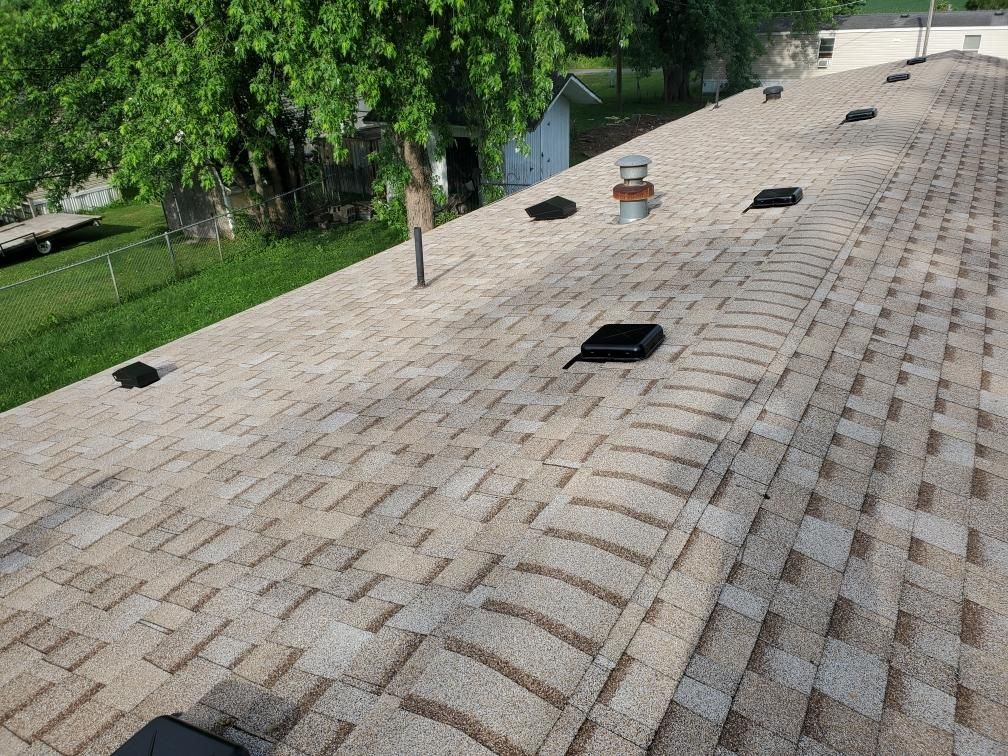
A properly ventilated roof works as a system. Cool air enters through intake vents positioned at the soffit along the eaves, travels up through the attic space, and exits through exhaust vents at or near the ridge. That continuous airflow serves two functions that directly affect how long the roof lasts: it removes heat during summer months and expels moisture-laden air before it can condense and damage the structure.
When that airflow is blocked, restricted, or never properly installed, the consequences build quietly over time. Most Kankakee County homeowners do not discover a ventilation problem until it has already caused years of damage to the shingles, the decking, or both. Understanding how ventilation affects roof life is the first step toward knowing whether the problem is already affecting the home.
How Heat Destroys Shingles from the Inside Out
During an Illinois summer, an attic without adequate ventilation can reach temperatures well above 150 degrees Fahrenheit. That heat radiates upward into the shingles from below while the sun heats them from above simultaneously. Shingles were not designed to absorb heat from both directions at once.
The result is accelerated deterioration of the asphalt and granule surface that protects shingles from UV exposure and weather. Granules loosen and shed faster. The shingle material becomes brittle earlier than its rated lifespan. Curling, cupping, and cracking appear years ahead of schedule on a roof that looked perfectly fine from the street.
Most shingle manufacturers include attic ventilation requirements in their warranty terms. A roof installed over an improperly ventilated attic may not be eligible for full warranty coverage, which means the homeowner absorbs replacement costs that the warranty would otherwise cover if ventilation had been maintained correctly.
Moisture Buildup & What It Does to the Roof Deck
Heat is the summer problem. Moisture is the year-round one. Humid air from daily household activities, cooking, bathing, and even breathing rises into the attic space through gaps in the ceiling. In a well-ventilated attic, that air moves through and exits before it can accumulate. In a poorly ventilated attic, it collects against the cold underside of the roof deck and condenses.
That moisture causes the plywood or OSB decking to swell, soften, and eventually delaminate. Wet decking loses its structural integrity and its ability to hold roofing fasteners securely. It becomes a breeding environment for mold and rot that spreads through the structure over time. What starts as a ventilation deficiency eventually becomes a full roof replacement job when the decking can no longer support the roofing system above it.
Moisture damage in the decking is often invisible until a roofer is on the roof and finds soft spots underfoot during an inspection or replacement. By then, the problem has typically been developing for years. M&B Roofing’s free roof inspection includes assessment of the attic space and decking condition, which is often where ventilation problems first become visible to a professional.
How Poor Ventilation Creates Ice Dams in Kankakee County Winters
Illinois winters add a third dimension to the ventilation problem that is specific to cold climates. When an attic retains heat due to inadequate ventilation, that heat rises through the roof deck and warms the snow sitting on the roof above it. The snow melts from the bottom up and runs down the slope until it reaches the cold overhang at the eaves, where it refreezes into a ridge of ice.
That ice dam blocks subsequent meltwater from draining off the roof. The trapped water backs up under the shingles, forces itself through the roofing layers, and enters the home through the ceiling. Kankakee County homeowners who experience interior water damage during or after winter weather events frequently have ice dams as the underlying cause, and ice dams frequently trace back to a ventilation problem rather than a roofing failure.
A properly ventilated attic maintains a consistent low temperature throughout the roof deck. Without the warm air below driving the melt, snow sits on the roof without creating the conditions that produce ice dams. Correcting ventilation does not just protect the roof—it protects the ceilings, insulation, and interior structure from repeated water damage over the life of the roof.
Signs Your Roof May Have a Ventilation Problem
Several indicators suggest that poor ventilation is actively affecting a Kankakee County home:
- Shingles age faster than expected. If shingles are curling, cracking, or losing granules significantly before the end of their rated lifespan, attic heat may be a contributing factor.
- Ice dams form in winter. Repeated ice dam formation during Illinois winters is a reliable indicator that the attic is retaining more heat than it should.
- Unusually high summer cooling bills. An overheated attic radiates heat into the living space below, forcing the HVAC system to work harder to maintain comfortable temperatures. If cooling costs are climbing without a clear reason, attic ventilation is worth investigating.
- The attic feels extremely hot in summer. An attic that is significantly hotter than outdoor air temperatures on a summer afternoon has a ventilation problem. Some temperature differential is normal, but excessive heat indicates that exhaust capacity is insufficient.
- Moisture stains or frost on rafters. White frost forming on attic rafters in winter or water stains on wood surfaces indicate that humid air is condensing inside the attic rather than being expelled.
- Peeling paint or staining on interior ceilings. Moisture that has penetrated the roof deck eventually finds its way into the living space below. Staining or peeling paint on upper-floor ceilings is often the first visible interior sign of a moisture problem that started in the attic.
How Much Roof Life Poor Ventilation Can Cost You
The financial impact of poor roof ventilation is not limited to the cost of the roof itself. A shingle roof that should last 25 to 30 years may fail in 15 years or less under consistently poor ventilation conditions. That shortened lifespan means an unplanned replacement expense that proper ventilation could have deferred for a decade or more.
Warranty coverage that should protect against premature shingle failure may not apply if the installation did not meet the manufacturer’s ventilation requirements. Interior water damage from ice dams or decking moisture adds repair costs that accumulate separately from the roofing expense. Energy inefficiency from an overheated attic also produces higher utility costs every summer for as long as the problem goes unaddressed.
Addressing ventilation problems early, before they have caused years of damage, is almost always the most cost-effective path.
What M&B Roofing Can Do for Kankakee County Homeowners
M&B Roofing offers free roof inspections for homeowners throughout Kankakee County and surrounding areas. The inspection covers the shingles, flashing, decking condition, and attic ventilation as part of a comprehensive assessment of the roof’s current state and remaining lifespan. If ventilation issues have already caused shingle or decking damage, the team provides honest recommendations on what repairs or replacement the roof actually needs, with no pressure toward work that is not warranted.
With over 20 years of experience in residential roofing across Kankakee, Will, Cook, and Iroquois counties, M&B Roofing handles everything from targeted repairs and storm damage restoration to full roof replacements. Same-day emergency service is available in most cases when acute damage requires immediate response. Every job starts with a free estimate and a straightforward assessment of what the roof needs.
Contact M&B Roofing in Kankakee County
M&B Roofing serves
Kankakee,
Manteno,
Bradley,
Herscher,
Chebanse, and the surrounding Kankakee County area with licensed residential
roofing services.
Contact M&B Roofing today for a
free roof inspection and find out whether poor ventilation is already affecting your roof.